
Roland Garros
What to expect at Roland Garros 2027
Roland Garros 2027 at a glance
Qualifying week: 17 to 21 May 2027
Yannick Noah Day: Saturday 22 May 2027
Main draw: 23 May to 6 June 2027
The tournament that clay built
Roland Garros is the only Grand Slam played on clay. That single fact shapes everything: the rallies run longer, the bounce sits higher, and the players who win here often do so through patience and precision rather than power. It is a different game from the one played at Wimbledon or Flushing Meadows, and it attracts a different kind of tennis.
The setting helps. The Stade Roland Garros sits in the 16th arrondissement, bordered by the Bois de Boulogne on one side and a residential neighbourhood on the other. It does not feel like an arena that dropped from the sky. It feels like Paris: contained, a little dense, layered with history. The clay courts have hosted decades of the sport’s best tennis, and the place knows it. There is a kind of density to the venue that you notice without quite being able to explain it.
Paris in late May is genuinely good. The weather cooperates more often than not, the terraces are open, and the tennis happens to be the best in the world at exactly that moment. It is not a difficult time to be convinced to go. It is worth reading why Roland Garros tickets are in such high demand to understand the access challenge before you start planning.
What being there actually feels like
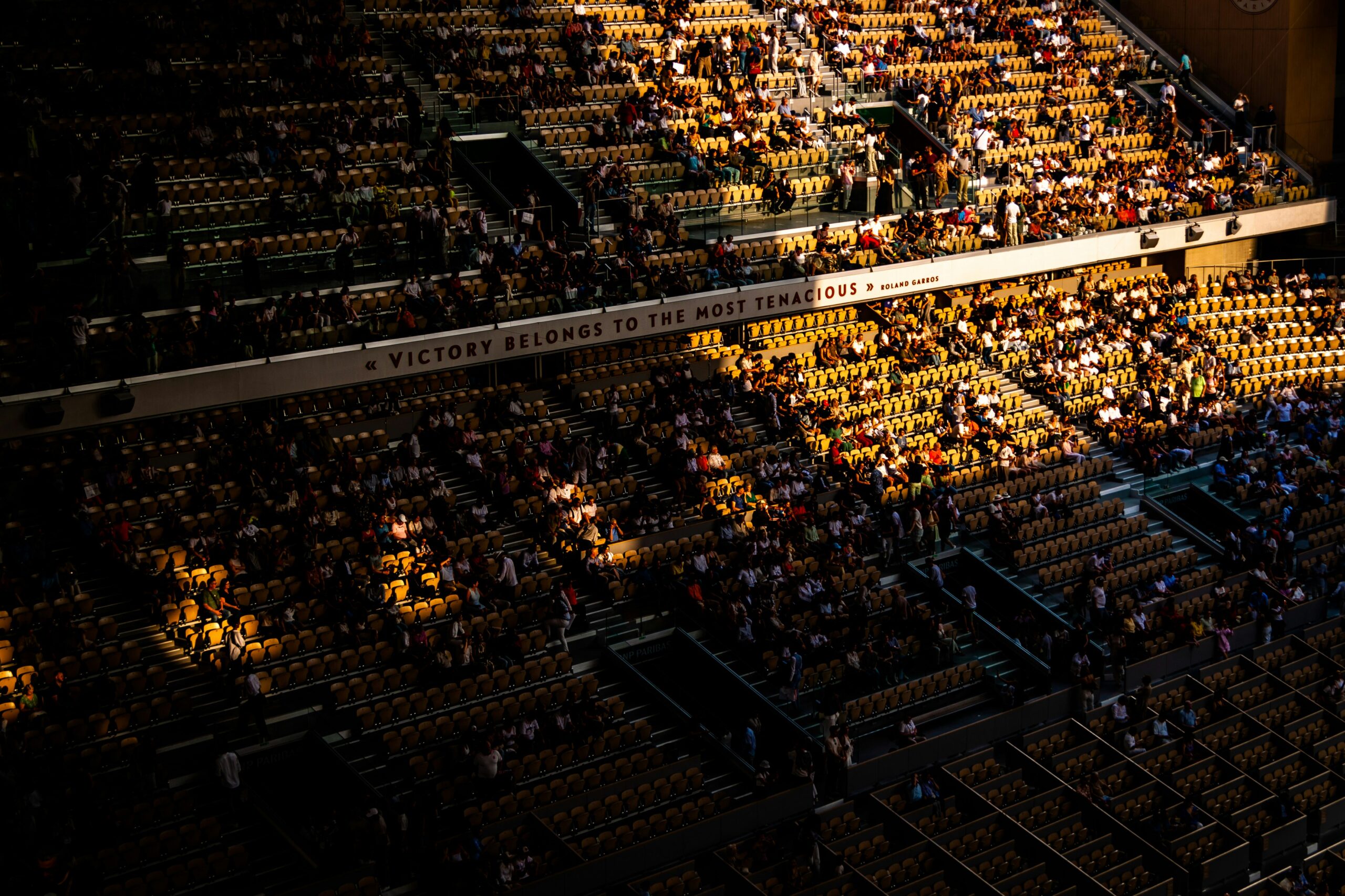
The site is compact for a Grand Slam. You can walk from Chatrier, the main show court, to Suzanne Lenglen in a few minutes, and the smaller courts feel genuinely close. Close enough that you can watch a qualifier from the front row for a session price that would get you a partial view seat at the main draws. That proximity is one of the things people mention most when they come back. You are rarely far from the tennis.
The sound on clay is distinctive. The ball sounds different off the surface, and the atmosphere in the grounds tends toward knowledgeable rather than boisterous. French crowds are engaged and have opinions. They will applaud a beautiful drop shot from either player, and they will let you know when they find something unsatisfying. It keeps things lively.
Eat something. The food at Roland Garros has improved considerably over the past decade, and there are worse places to spend a lunch break than watching a second-round match on a side court with a glass of Bordeaux. The Roland Garros hospitality options range from casual to considerably more involved, depending on how you want to spend the day.
How the two weeks unfold
The main draw runs from 23 May to 6 June 2027, but the tournament is already underway before that. Qualifying takes place from 17 to 21 May, and it is worth attending if you want to see competitive tennis in an unusually relaxed atmosphere. Tickets are inexpensive, the courts are small, and some of the players you are watching will be back in main draw rounds within a year or two.
On Saturday 22 May, the qualifying week closes with Yannick Noah Day, an annual charity event that turns the venue into something closer to a festival than a tennis tournament. It is popular with families and with fans who want the full Roland Garros experience without the intensity of the main draw crowds.
The first week of the main draw is typically the most accessible. The best players are not yet at full intensity, upsets happen, and there is a wider range of matches across all courts simultaneously. The second week narrows. By the quarterfinals, the full weight of the tournament is visible, and the atmosphere on Chatrier shifts noticeably.
The full Roland Garros schedule follows a consistent structure each year: early rounds spread across all courts, then consolidation onto the two main show courts as the draw reduces. Finals weekend is its own thing entirely. The atmosphere is different, the crowd is dressed differently, and the tennis tends to be the best of the fortnight.
The courts, and which one to choose
The courts at Roland Garros each have a different character worth understanding before you book. Chatrier is the main stage, with 15,000 seats and night sessions from the second round onwards. Lenglen holds 10,000 and, depending on the match, is often the better seat. Close to the action, better sightlines, and a crowd that tends to be more engaged than the tourists who fill the upper tiers of Chatrier on early-round days.
Simonne-Mathieu, the newest of the three principal courts, has a greenhouse-like roof structure that makes it striking to sit in regardless of what is happening below. It also tends to have the most interesting draws in the first week, as the scheduling team uses it for matches that do not quite fit Chatrier or Lenglen but deserve more than an outside court.
Beyond the three show courts, the outside courts are where Roland Garros is at its most approachable. Standing a few metres from a top-50 player during a first-round qualifying match is the kind of experience that does not exist at most major sporting events. Go early in the week and wander.
Planning the Paris side of the trip
The 16th arrondissement is not the most central part of Paris, but it is well-connected. The Roland Garros station on the Paris Metro puts you at the gates in under 20 minutes from most of the city centre. Taxis and rideshares work fine, though traffic near the venue gets congested in the afternoons. The Metro is the sensible option.
Hotels near the Bois de Boulogne are convenient but not particularly affordable. Many visitors prefer to stay closer to Saint-Germain-des-Pres or the 7th and use the Metro, which keeps the options wider and the evenings more interesting. Paris in May and June fills up early, particularly for the second week. Booking accommodation before you have your tickets is not unusual.
At the gate: bring your ticket confirmation, and if you are carrying anything larger than a small bag, allow time for security. Bags are checked on entry. The queues on busy days can add 20 to 30 minutes to your arrival, worth knowing if you have a session start time to hit. There is a good guide to the Roland Garros visitor experience that covers the site layout, entrance points, and what to bring.
When to start thinking about tickets
Earlier than most people expect. The official ballot through the FFT opens each autumn for the following year’s tournament, typically around October or November. It is a lottery, and the odds are not flattering. For the main show courts, most applicants come away with nothing. That is the core reason the secondary market exists.
The secondary market opens earlier than the ballot and runs through the tournament itself, with availability and pricing shifting as the draw progresses. Inventory tends to broaden in the months following the previous year’s tournament, and interest from buyers accelerates closer to the main draw. For the qualifying week and Yannick Noah Day specifically, availability on the secondary market is generally better than for main draw sessions, and it is a good entry point for first-time visitors who want to get a feel for the venue without paying peak prices.
Pricing varies by session, court, round, and category. There is no single answer to how much Roland Garros tickets cost, and the range is wide depending on what you are looking for. What stays consistent is the structure: through Tennis Ticket Service, seats are always sold in pairs, and you will receive the category you order or better. Those are the two things we guarantee.
The Roland Garros tickets page has current inventory. If nothing is listed yet for the upcoming edition, the page will be updated once the next year’s allocation is confirmed. Signing up for the early-bird notification is the most straightforward way to know when that happens.
Ready to plan your visit?
Browse available tickets: Roland Garros 2027 tickets at Tennis Ticket Service
Get early access: Sign up for the newsletter and we will notify you when ballot dates are announced and when new inventory goes live. No noise. Just the updates that matter for planning.