
US Open
The Historic Journey of the US Open Grand Slam
The US Open is one of the four Grand Slam tournaments, and of the four, it’s arguably the least attached to its own tradition. Where Wimbledon keeps to strict codes and Roland Garros stays loyal to clay, the US Open has changed its surface, its rules and even its schedule more than any other major, and turned that willingness to change into part of its identity.
Where it started
The tournament began in 1881 as the U.S. National Championship, played on grass in Newport, Rhode Island, and open only to men. Women were admitted in 1887, six years after the men’s event started, an early sign that the tournament would keep bending toward inclusion faster than most.
The bigger shift came in 1968, when the sport entered the Open Era. Amateurs and professionals could finally compete on the same court, which turned a genteel pastime into a paying sport almost overnight.
Three surfaces, one tournament
No other Grand Slam has changed its playing surface as often as the US Open. It stayed on grass for nearly a century, until the wear and maintenance costs became hard to justify. A brief switch to green clay followed from 1975 to 1977, slowing the game down and rewarding baseline rallies over serve-and-volley.
Hard courts arrived in 1978, at the tournament’s new home in Flushing Meadows, and they’ve stayed ever since. The surface plays fast but true, and it suits a wider range of playing styles than either grass or clay ever did.
A tournament that keeps innovating
The US Open was first to introduce the tiebreak, in 1970, cutting short the marathon deuce sets that used to define deciding sets. Five years later, it became the first Grand Slam to pay men and women equally, a decision other majors took years to match.
In 2001, it was among the first tournaments anywhere to use electronic line-calling, trading a few controversial umpire calls for a system players and fans both trusted more. And since 2016, retractable roofs over the main stadiums mean rain delays are largely a thing of the past, letting night sessions run on schedule.
Matches people still talk about
Jimmy Connors against Björn Borg in 1976 pitted two entirely different games against each other, Connors’ aggression against Borg’s patience from the baseline, and the contrast helped put the tournament on the international map.
In 2001, Serena and Venus Williams played the first Grand Slam final between two sisters, a match that reached well beyond tennis and pulled new attention to the sport. Ten years later, Djokovic saved two match points against Federer in a semifinal rally still replayed today.
The tournament has also had a habit of producing teenage champions and outsiders. Tracy Austin won a title at sixteen, and Emma Raducanu came through qualifying to win the whole thing in 2021.
What it’s like beyond the court
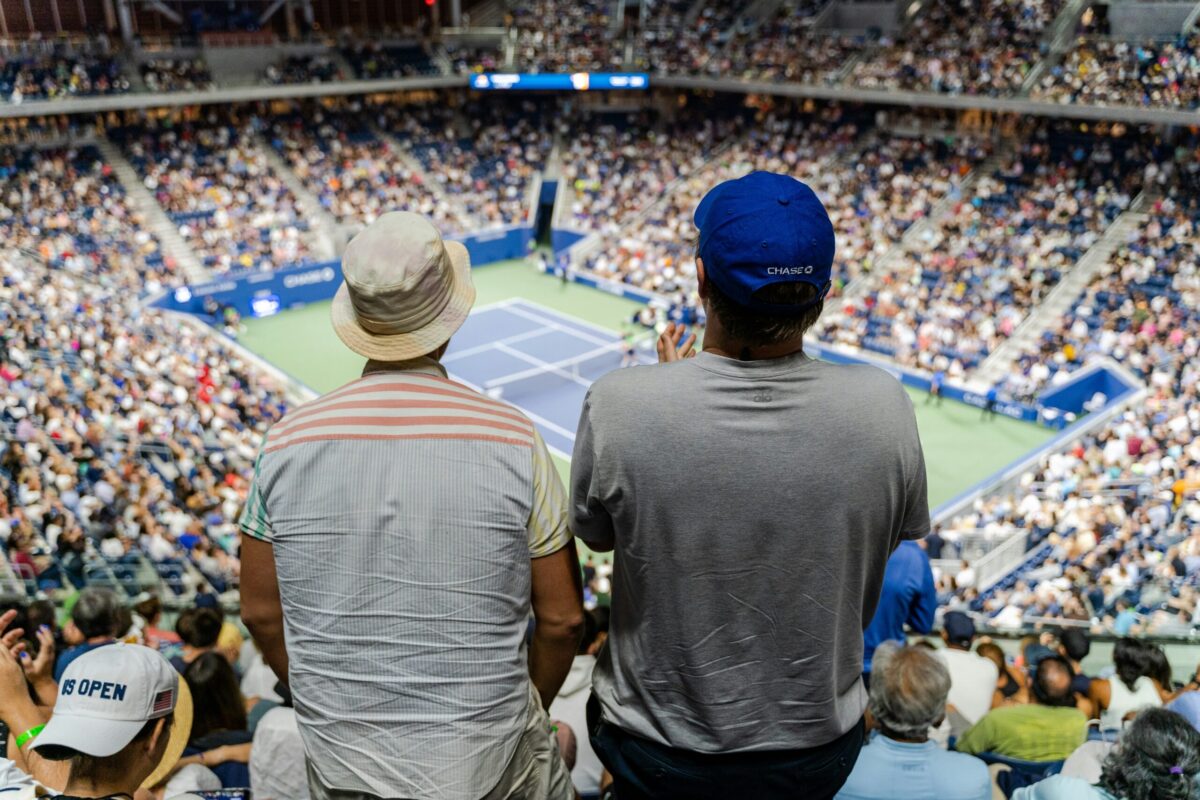
The US Open doesn’t try to be understated. Where Wimbledon keeps things formal and Roland Garros leans into its clay-court heritage, the US Open runs on New York energy: food from around the world, live music between matches, and a crowd that’s louder than most tennis crowds get.
Arthur Ashe Stadium seats more than 23,000, making it the largest tennis venue in the world, yet the atmosphere holds up even in the upper tiers, especially once the evening sessions get going.
What to know before you book
Tickets sell out fast, especially for the second week. If a specific match matters to you, plan as early as you can once dates are announced.
Ground passes give you access to the outer courts and practice sessions, a good way to catch rising players up close for less. Reserved seats at Arthur Ashe or Louis Armstrong get you a guaranteed view of the main draws. VIP and hospitality packages add lounge access and catering, aimed at guests who want more than just a seat.
Price depends on the match, the court and how close to the final you’re buying. It’s a secondary market, so figures move with demand rather than sitting at a fixed rate.
Every US Open ticket through Tennis Ticket Service comes with seats guaranteed together and a straightforward booking process from first round to final.
Why it’s worth attending
No other Grand Slam mixes history and reinvention quite the way the US Open does. It respects where it came from while treating almost everything, from the surface to the technology, as open to change.
Whether you’re there for the tennis or for the experience around it, it delivers both. For a lot of people who go once, it becomes the major they keep coming back to.